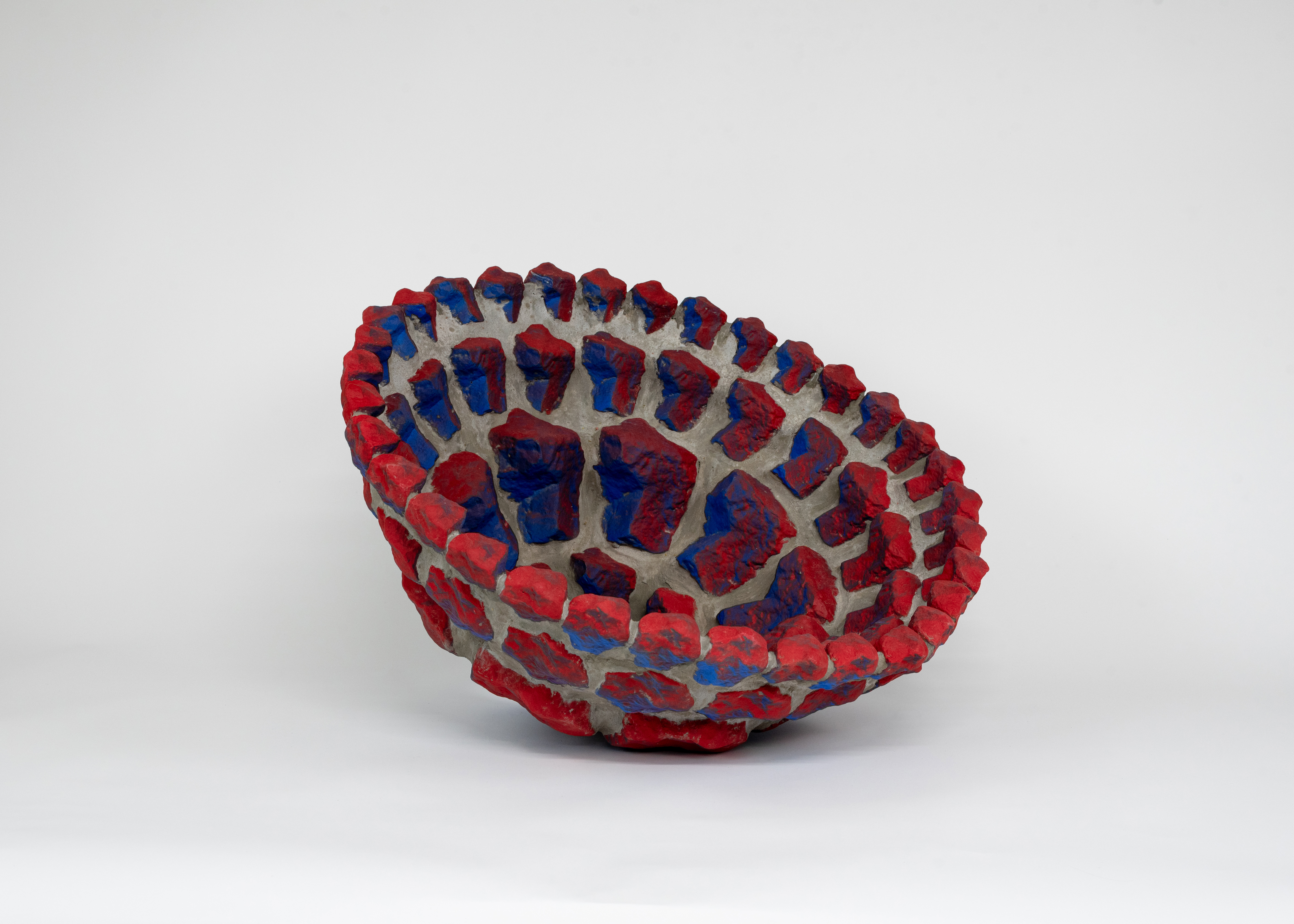
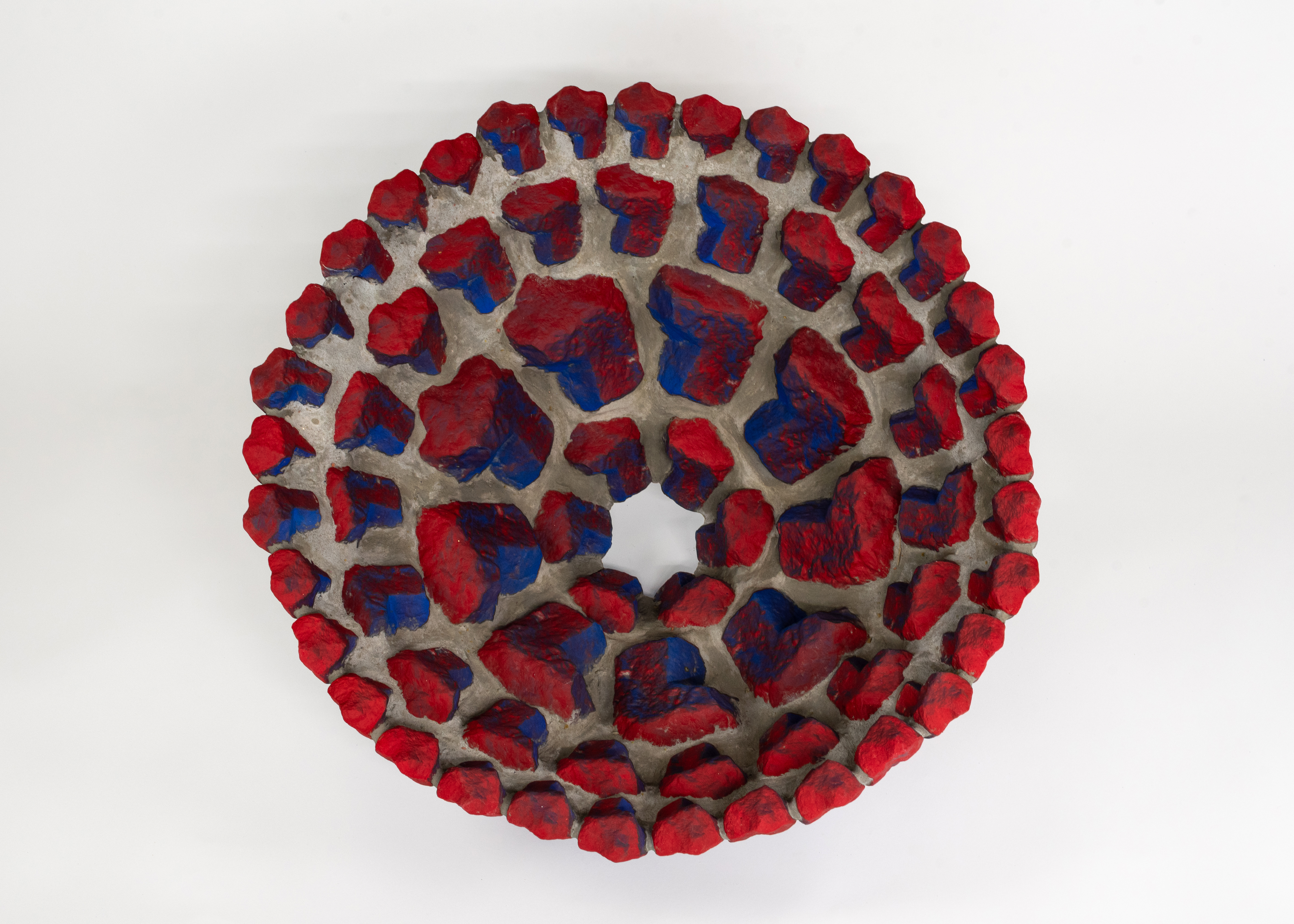
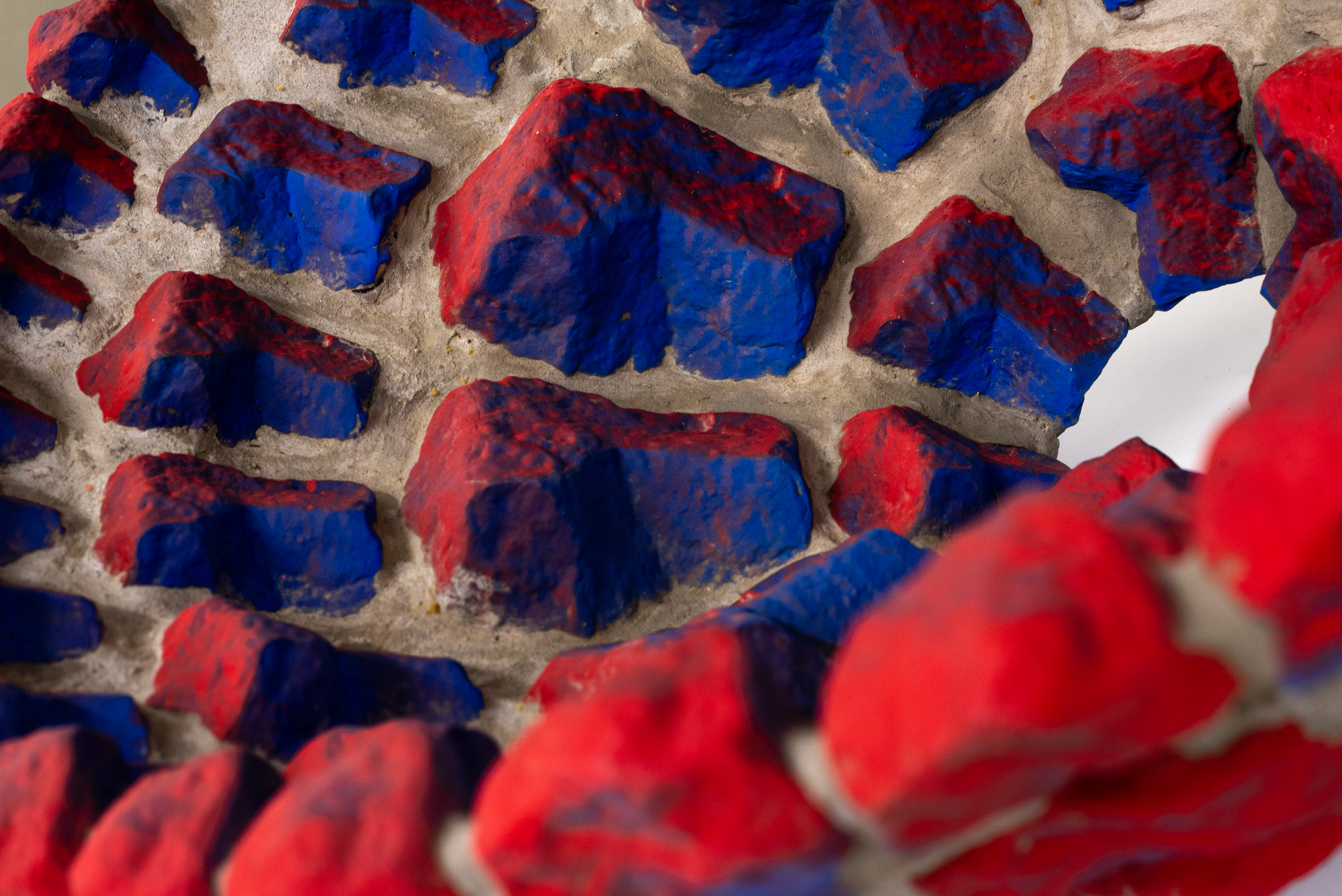
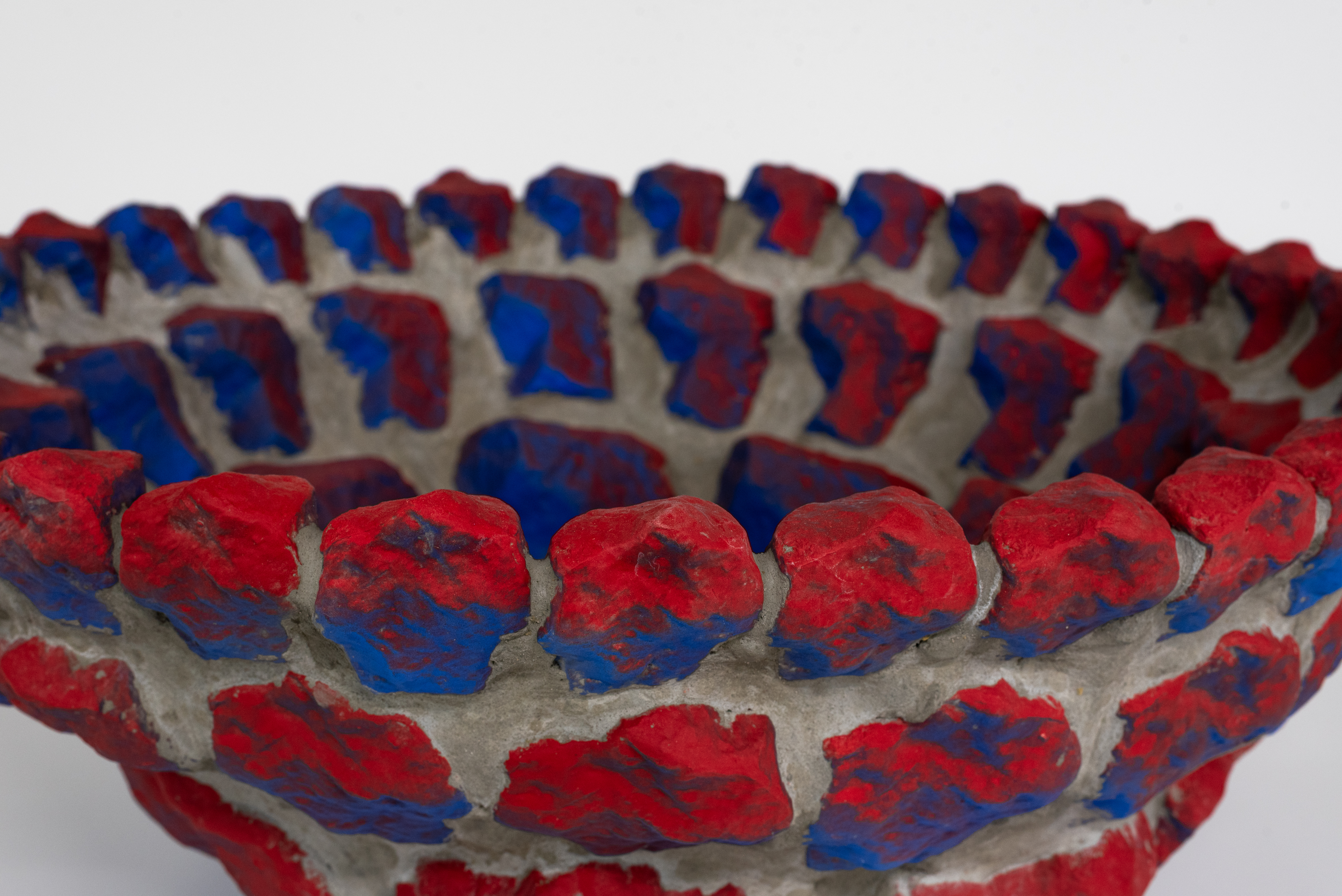
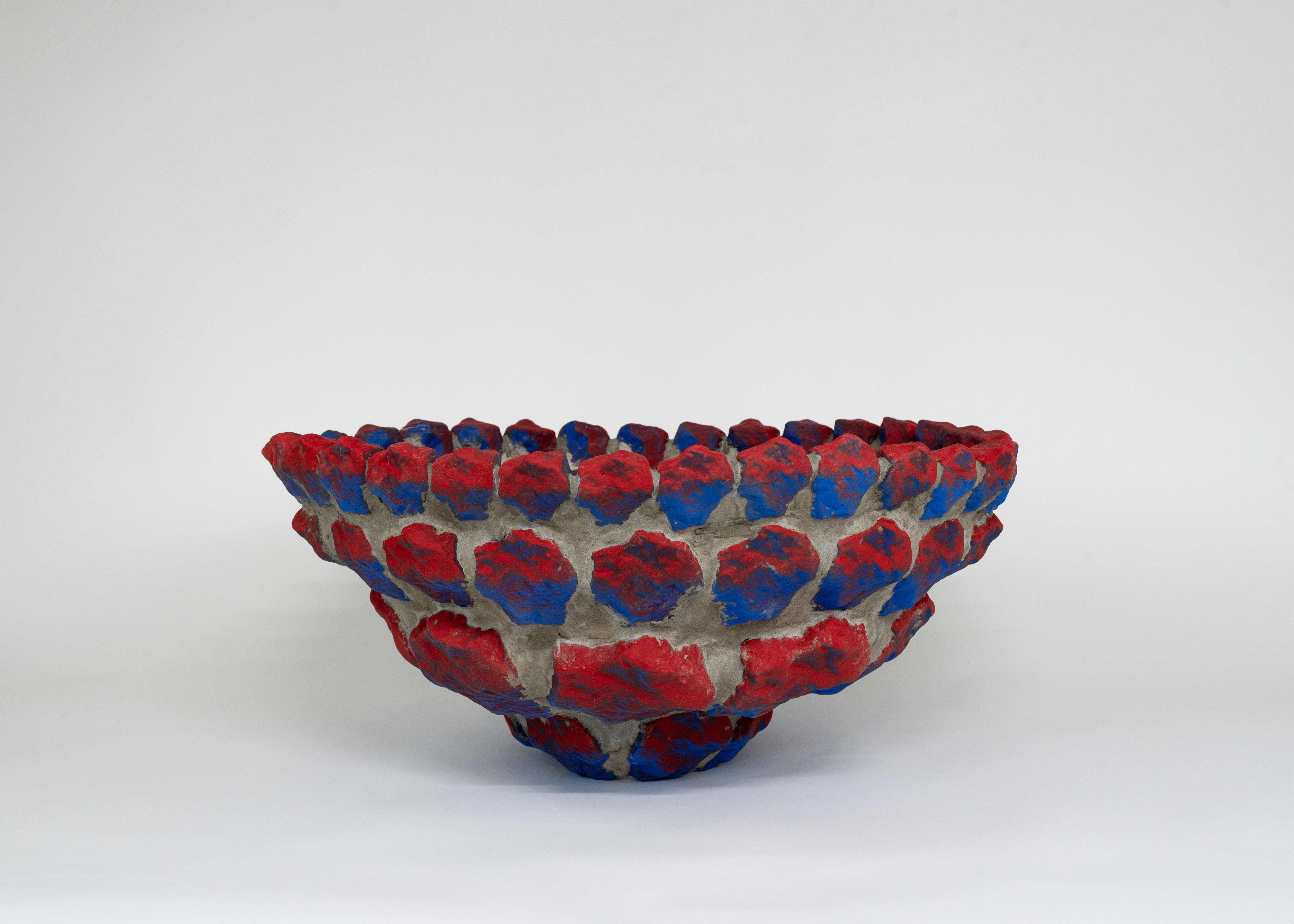
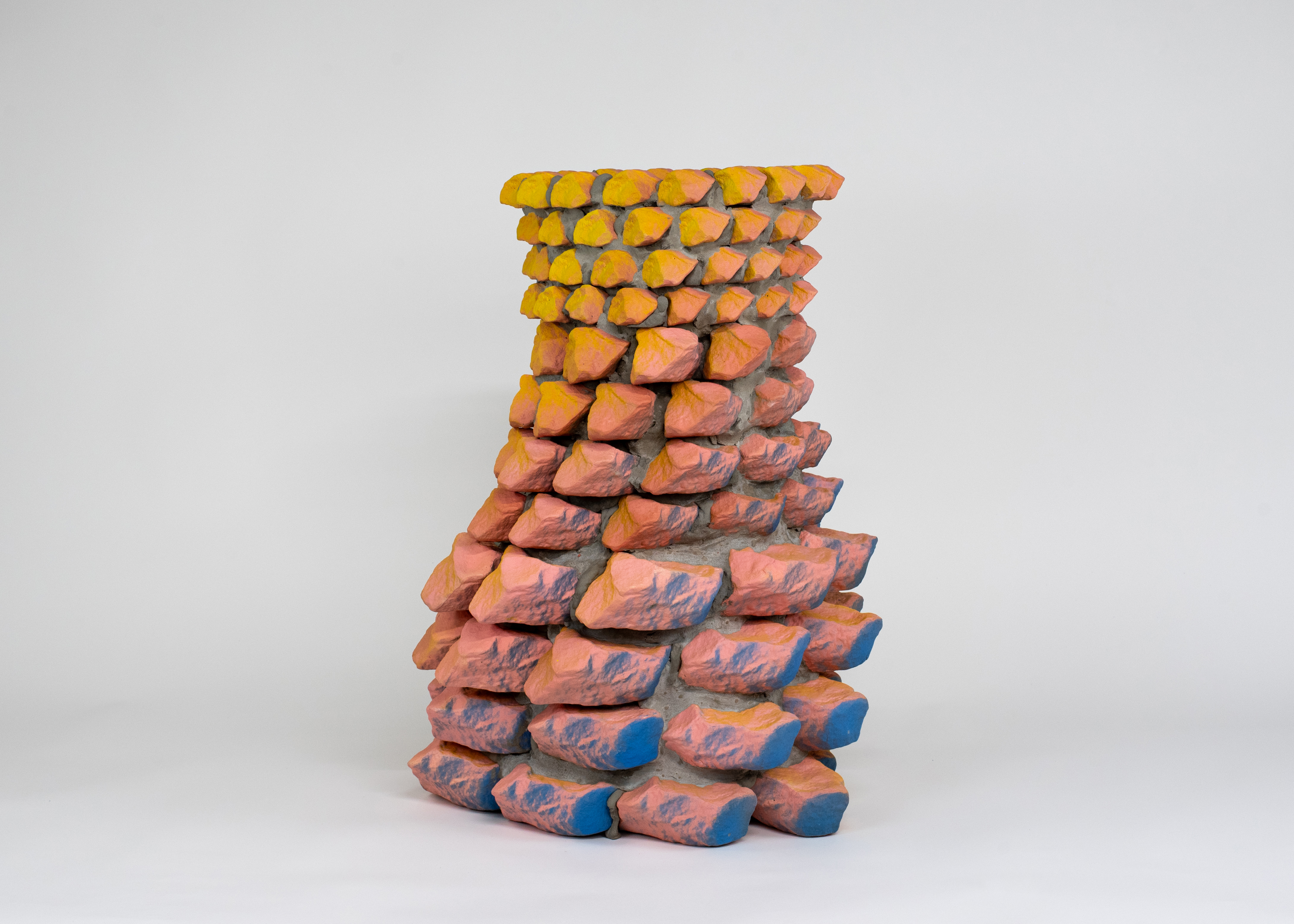
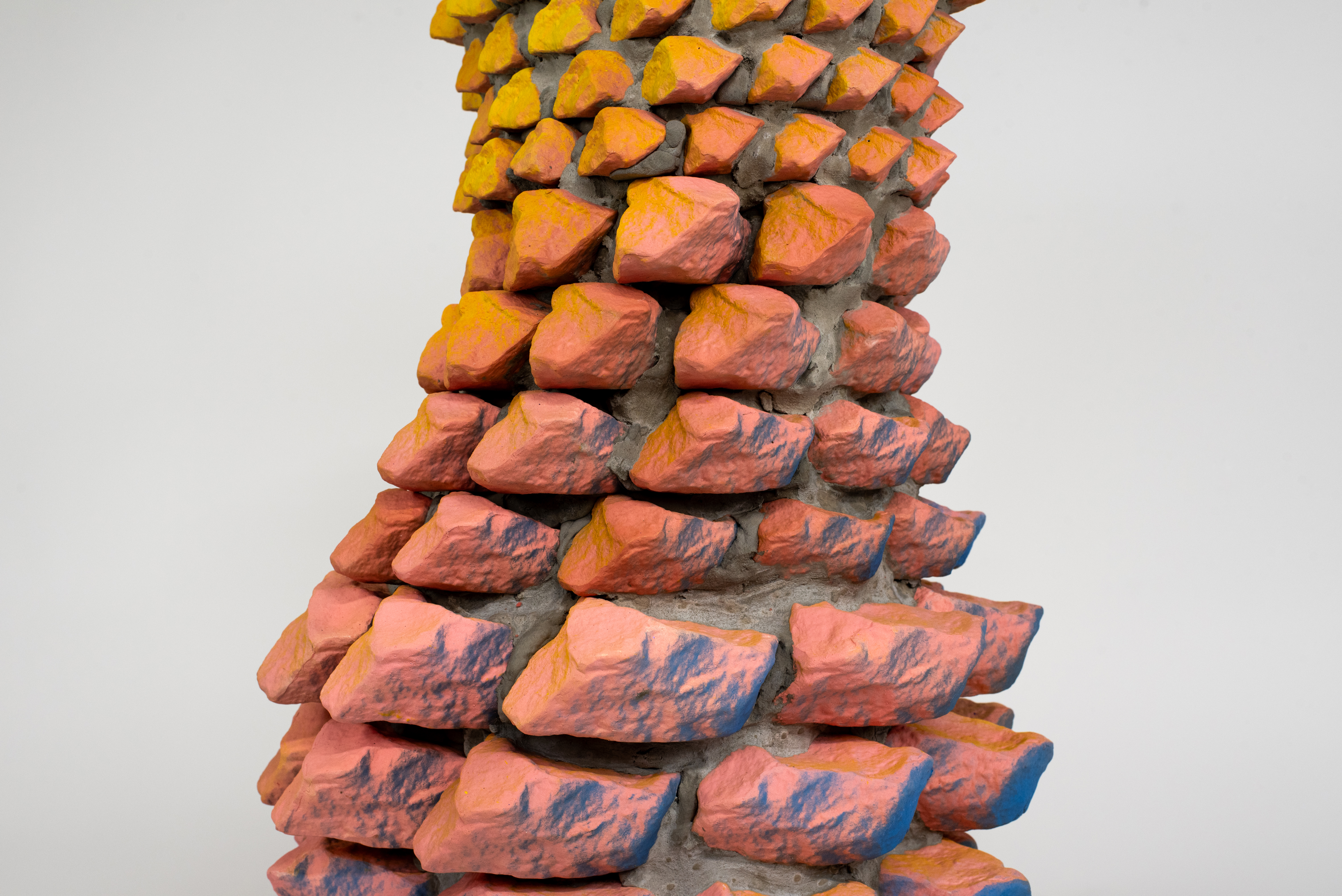
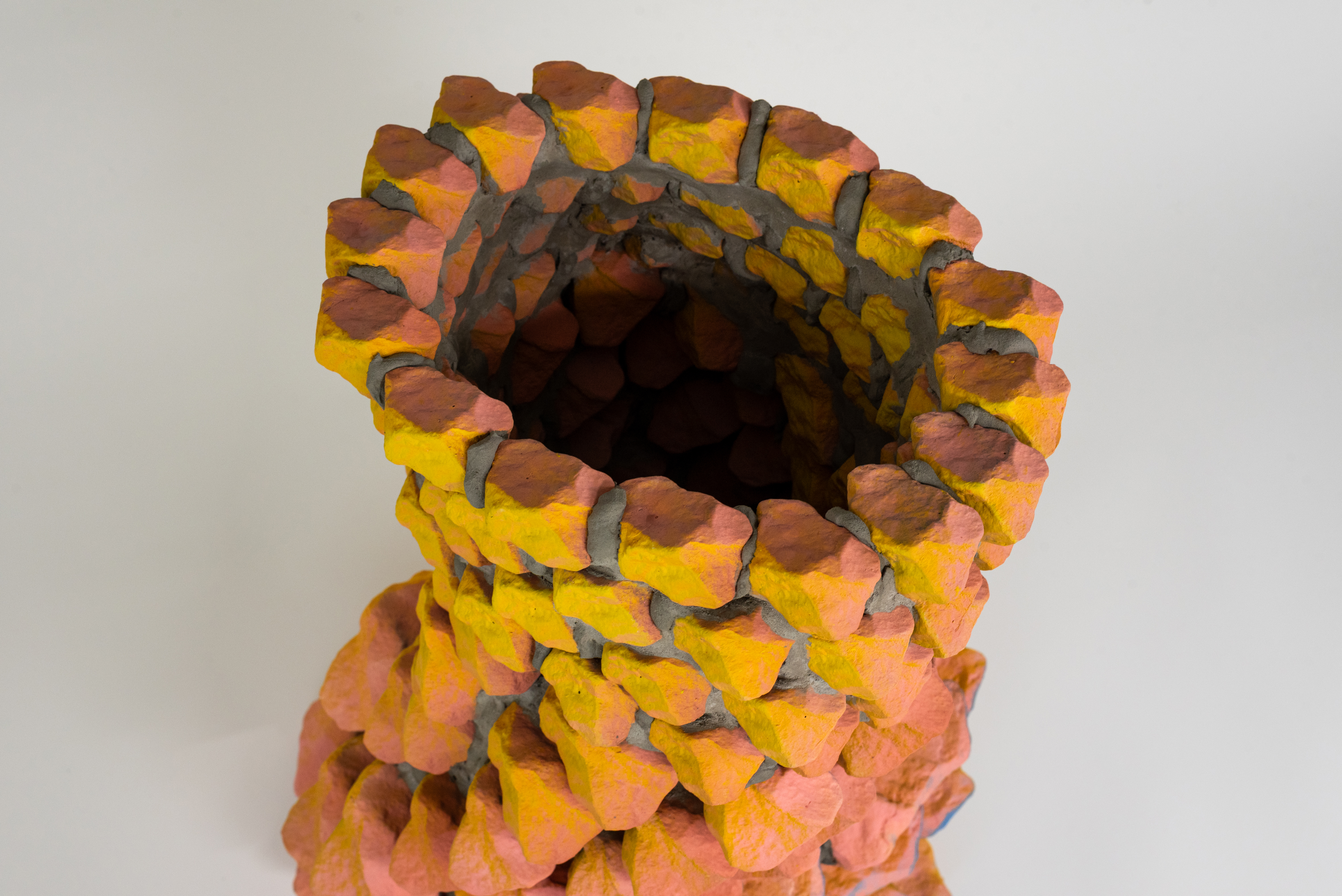
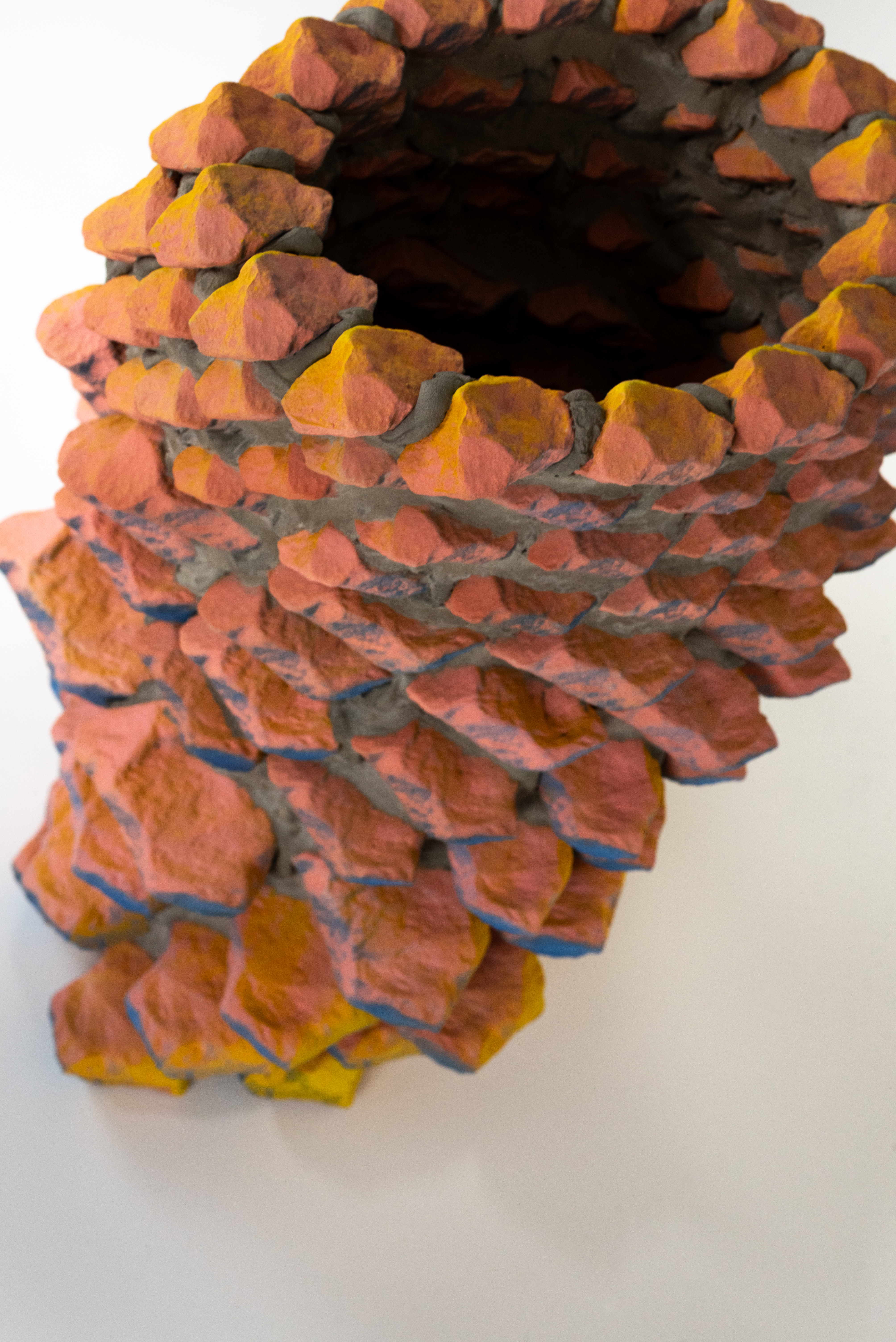
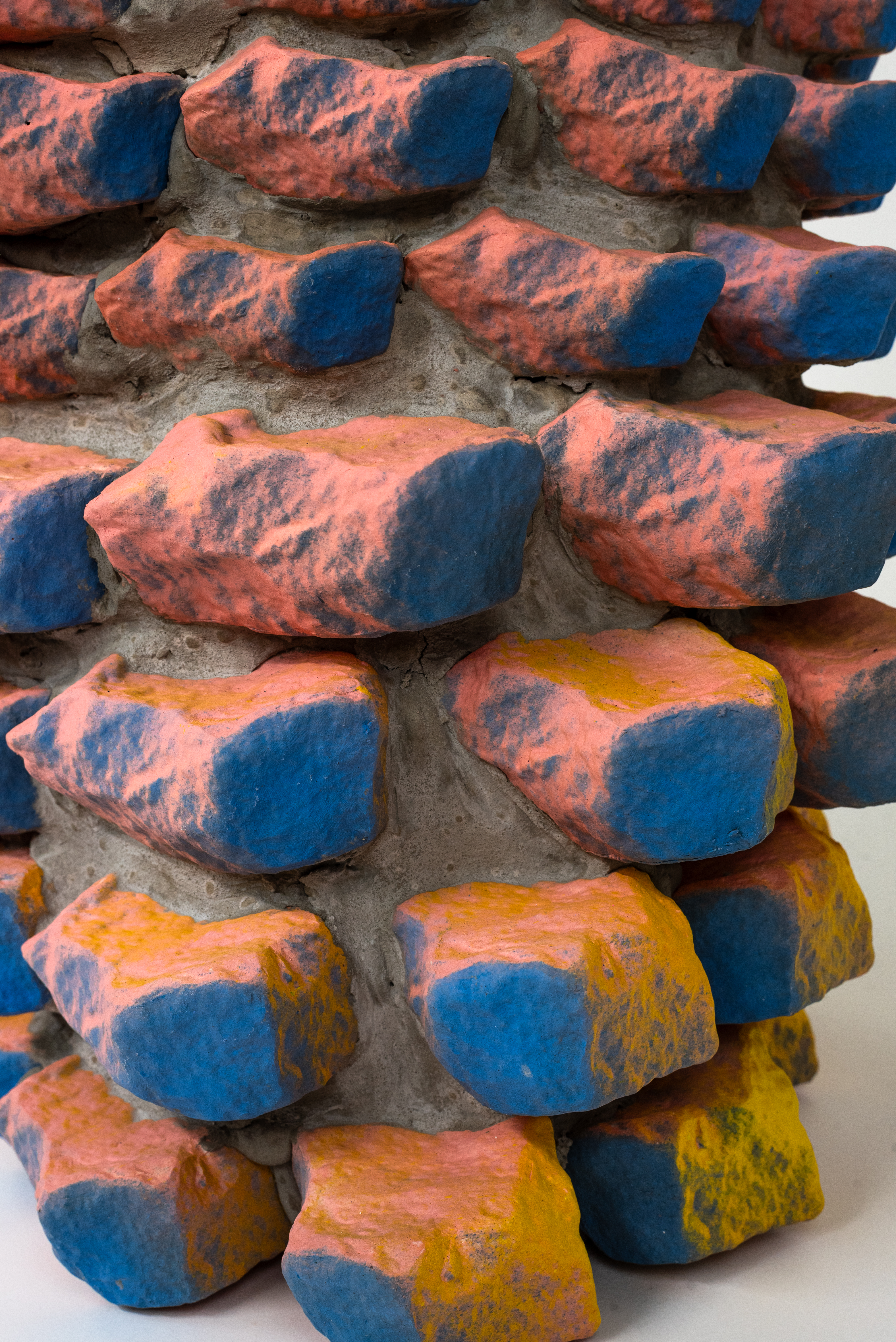
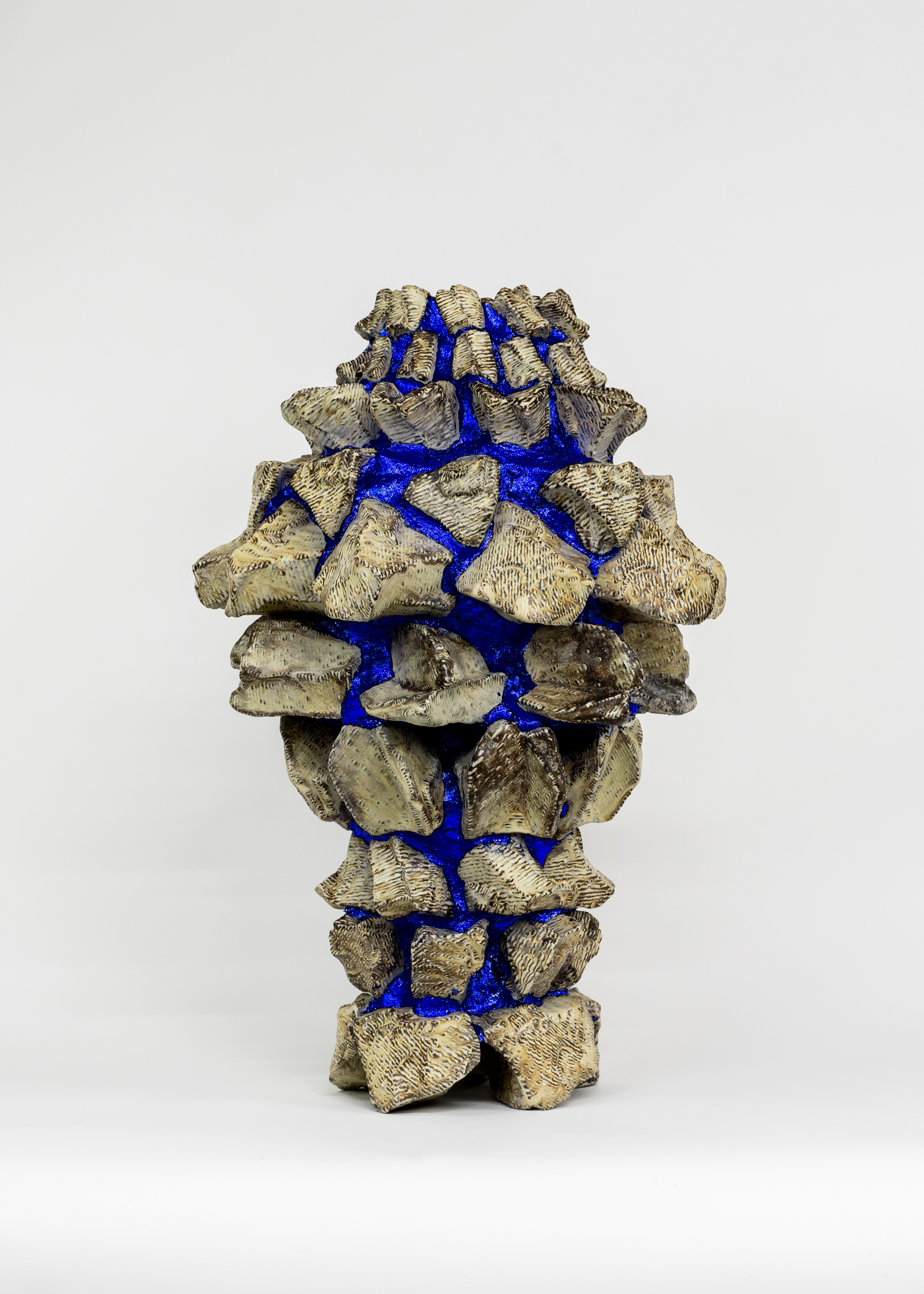
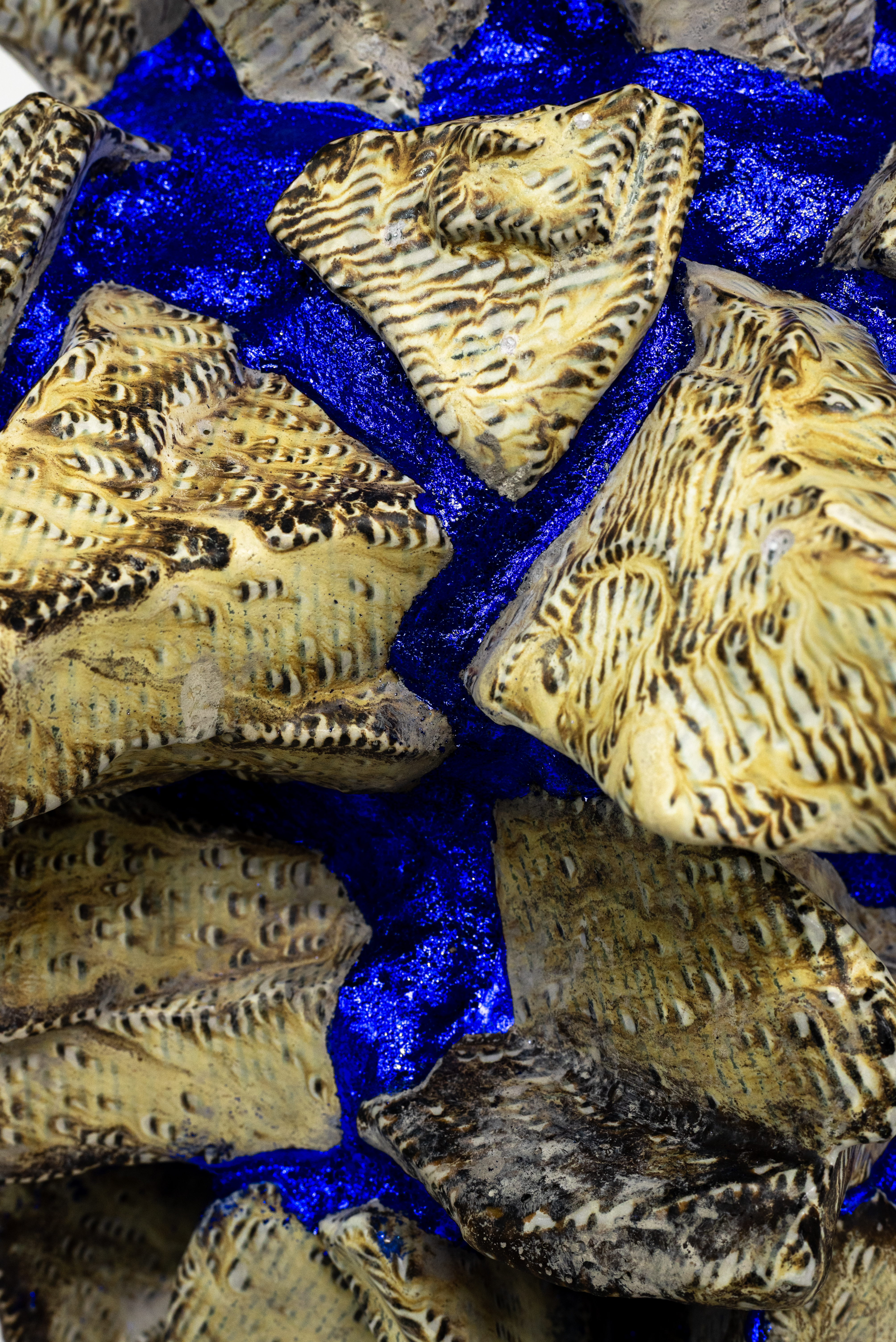
At the core of my work are rocks and minerals, materials with a geological timeline that predates human history. These natural forms, shaped by millennia, serve as both inspiration and raw material. Now, I assess them differently, considering their spatial presence, angles, and potential as digital scans. This multilayered way of looking at simple objects is mirrored in my process: first I scan rocks using photogrammetry or other digital scanning processes, then I bring them into CAD environments to later reinterpret them using 3D printing in clay and plastic. From that, I create molds that allow me to reproduce multiples and experiment with decoration. This repetitive and laborious process challenges assumptions about digital production, often perceived as immediate and opposite from the slow transformations we can witness in nature. Each transformation leaves a trace, a loss of fidelity that becomes part of the object’s new identity. These works hold a dual history: geological and digital. Rather than designing forms from scratch, I’m drawn to the irregularities and subtleties that nature has already carved. Some prints are covered in optical patterns that visually flatten the form, referencing the flatness of working on a screen. Others are repeated, echoing early 2-bit video game graphics, an easy task in software, but painstaking to replicate by hand through casting.